Signing a vendor contract is commonplace enough that it seems straightforward: you need a service or product, the vendor proposes terms, you agree, and move ahead. But beware! Some vendor contracts may contain obligations you don’t anticipate, termination rights you didn’t negotiate, or delivery terms that leave you vulnerable. Getting it right first matters more than you may think and can save you lots in terms of time and money.
In this blog, we’ll walk through key areas to review, what businesses often overlook in contracts, and strategic questions to ask before you commit.
Why Vendor Contracts Deserve Careful Attention
Don’t think of vendor agreements as just purchase orders or service engagements. They define how your business will work with another entity for months or years. If the vendor fails you, you may be stuck with expensive penalties or a lack of recourse. If you grow or change, the contract may trap you in unfavorable terms. By reviewing vendor contracts proactively, you preserve your choices and protect your business.
What to Look for in Every Vendor Contract Agreement
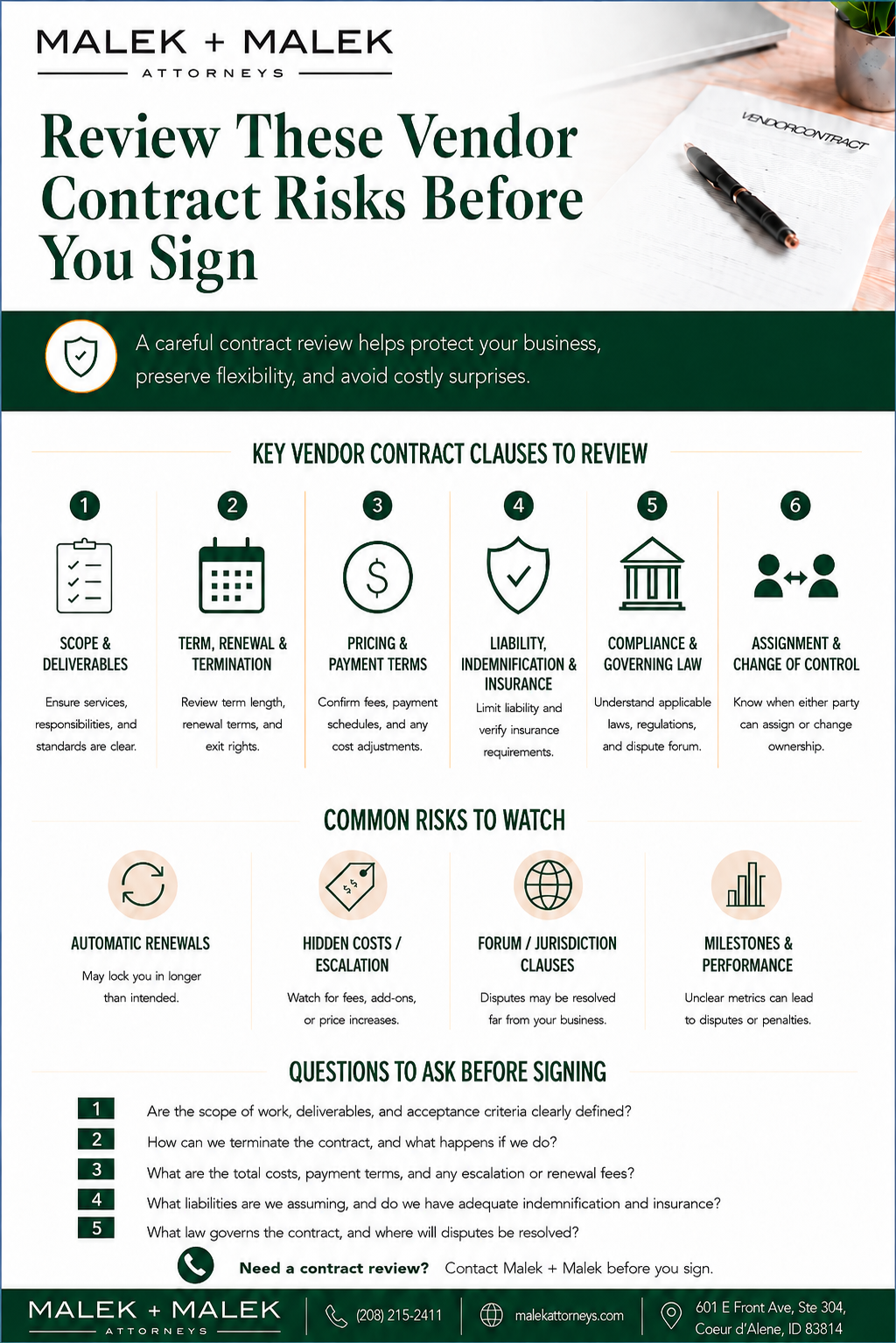
1. Scope and deliverables
Ensure the contract clearly describes what the vendor will deliver, when and how. If the “scope” is vague, you may get unexpected charges or low performance. Insist on precision and clarity in your contracts.
2. Term, renewal & termination rights
How long are you committed? Are there automatic renewals? Can you exit early if results aren’t met? Make sure termination rights align with your business’s flexibility.
3. Pricing and payment terms
Vendors often include complex pricing structures or hidden escalation clauses. For those of us in Idaho, note that we have a statute on prompt payment: under Idaho Code § 67-2302 the state must pay invoices within 60 days unless contracted otherwise. While that statute applies to state agencies, it signals the importance of clear payment terms in vendor contracts.
4. Indemnification, liability & insurance
You’ll want to know who bears risk if things go wrong. Does the vendor have adequate insurance? Are you indemnifying the vendor? Certain terms may be prohibited when public agencies are involved, but similar concepts apply in private contracts too.
5. Compliance and governing law
If you work with state or federal entities or regulated industries (for example, healthcare or real estate), your vendor contract may impose additional compliance obligations. Idaho procurement regulations warn that contracts may be void if they contain unlawful indemnification or inappropriate waiver of sovereign immunity.
6. Change of control and assignment clauses
If your business expands, sells, or merges, you’ll want to understand how vendor contracts treat that. Can the vendor assign the contract to a third party? Can you exit if they change control? These clauses are often overlooked but can significantly impact flexibility.

Common Mistakes Businesses Make in Vendor Contract Management
If there are any issues with vendor contracts, they don’t show up until tested during renewal, a dispute, or a change in business structure. Paying attention to these common pitfalls can help you avoid unnecessary costs or operational headaches down the road:
- Automatic renewals and co-terming: Long-term vendor contracts can lock you in across multiple years without review.
- Jurisdiction or forum-selection clauses: Some vendors require disputes to be resolved out of state, increasing cost and complexity.
- Vendor deliverables tied to milestones: Without clear milestones, you may be obligated to pay despite poor performance.
- Change-of-control triggers: If your vendor is acquired, you may face renegotiation or termination risk.
Strategic Questions to Ask Before Signing a Vendor Agreement Contract
Hopefully, we’ve convinced you that a contract review before signing on with a vendor is critical. With that in mind, here are some questions to help you uncover potential risks and negotiate terms that protect your business before ink hits the page:
- Does the contract clearly define performance metrics and deliverables?
- What is the vendor’s termination obligation if they do not meet expectations?
- Who controls which law governs the contract and where disputes will be resolved?
- How will future changes in your business (growth, new markets, change of ownership) affect the contract?
- What indemnification and liability terms are in place, and are they balanced?
- Are there automatic renewals or long-term penalties?
- Are pricing escalation, change-order clauses, or hidden costs clearly defined?
- Does the vendor contract explicitly allocate compliance responsibilities (especially if you are in a regulated industry)?
Why Trust Malek + Malek for Vendor Contract Review
When it comes to vendor contract management, experience matters. At Malek + Malek Attorneys, our legal team combines deep knowledge of Idaho contract law with hands-on experience helping businesses of all sizes, from startups to established corporations, structure and negotiate agreements that stand up to scrutiny.
Our attorneys regularly advise clients on:
- Drafting and reviewing vendor contracts that minimize risk and clarify obligations.
- Identifying and revising unfavorable clauses, such as one-sided indemnifications or auto-renewals.
- Ensuring compliance with Idaho statutes and industry-specific regulations.
- Managing contract renewals, amendments, and enforcement with confidence.
Our firm’s approach is proactive, practical, and designed to prevent legal issues before they arise. We don’t just look at the legal language, we look at how the contract will operate in real-world business scenarios.
Protect Your Business with Malek + Malek’s Vendor Contract Expertise
Vendor contracts can feel routine, but every clause has the power to turn a good relationship into a costly obligation. A thoughtful review of vendor agreements is part of a smart business strategy.
Malek + MalekOur attorneys can help review any vendor contracts and bring attention to any cause for concern.
Contact Malek + Malek today to schedule a consultation and gain confidence before you sign your next vendor agreement contract.
Frequently Asked Questions
What is a vendor contract?
A vendor contract is a legally binding agreement between a business and an outside provider that defines deliverables, timelines, pricing, and responsibilities for goods or services.
Why should I have an attorney review my vendor contract?
An attorney can identify hidden risks, vague terms, or unfavorable clauses that could cost your business money later. Malek + Malek ensures your vendor contracts protect your interests and comply with Idaho law.
What should every vendor contract include?
Key sections include scope of work, pricing and payment terms, duration and termination clauses, liability and indemnification, and governing law. These define the rights and obligations of both parties.
What happens if I sign a bad vendor agreement contract?
A poorly drafted contract can limit your ability to terminate, lead to unexpected fees, or expose you to liability. Legal review before signing helps avoid costly disputes.
How can Malek + Malek help with vendor contract management?
Our attorneys assist businesses through every stage of the vendor contract management process, from initial review and negotiation to renewal and compliance checks, to keep agreements fair, enforceable, and beneficial.
This blog is not legal advice and does not create an attorney-client relationship with our firm. The content is intended to promote a general understanding of legal concepts and should not be relied upon as a substitute for obtaining legal advice from a qualified attorney regarding the reader’s specific circumstances. Readers should consult legal counsel for advice concerning their individual situations. All content is provided without any representations or warranties regarding completeness, accuracy, or timeliness.