It’s human nature to wait until something breaks before fixing it. The same is true in business, but a reactive approach to legal issues – think contracts, compliance deadlines, strategic transactions, or employee concerns – can be costly. Solving problems under pressure limits your options and exposes your business to unnecessary financial, operational, and reputational damage.
There is a better way, and that is routine Legal Risk Assessments (LRA). An LRA helps businesses identify legal vulnerabilities proactively and can help them move into major transactions, such as mergers, acquisitions, or financing rounds, with confidence and fewer surprises.
What Is a Legal Risk Assessment?
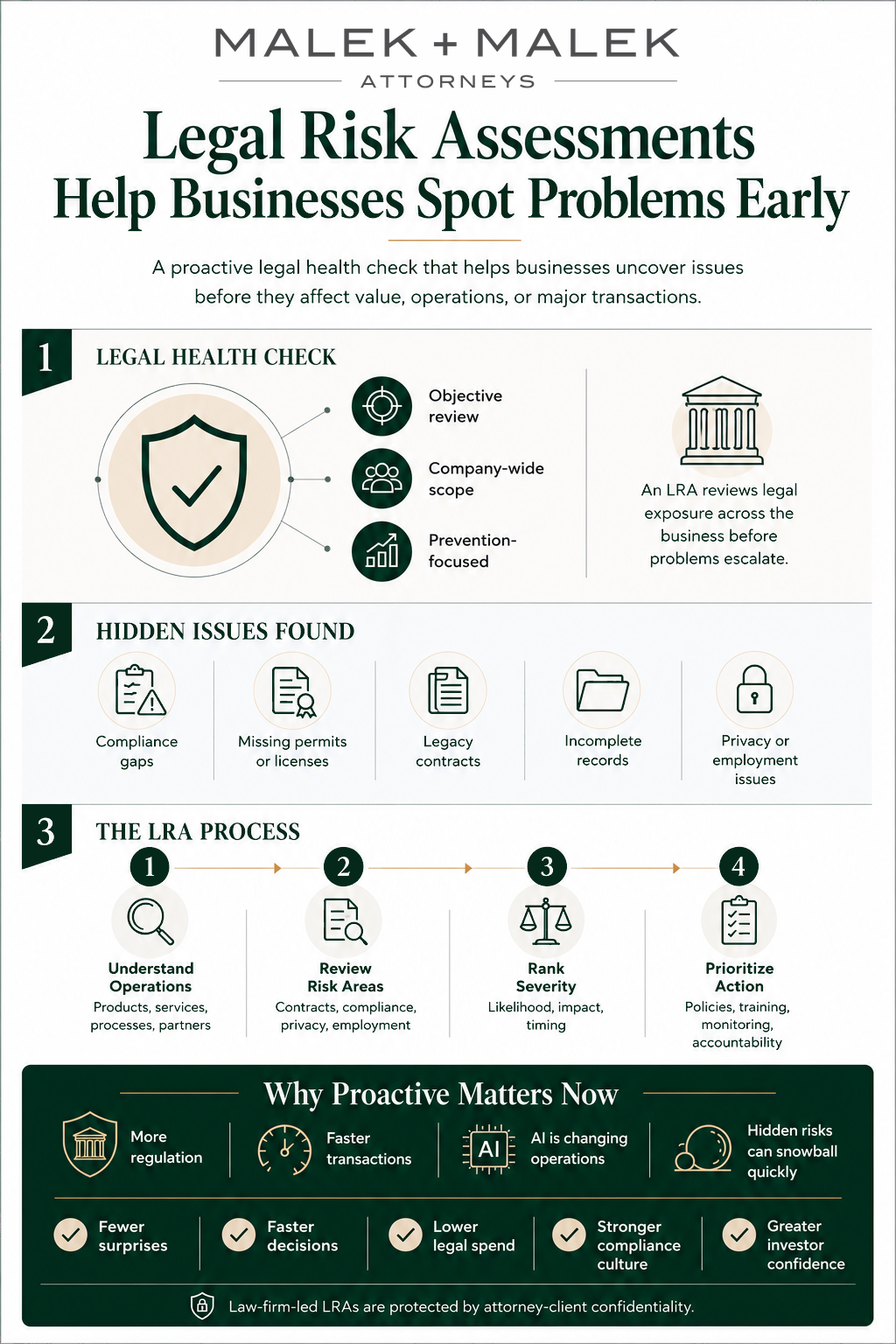
An LRA is an organized review of a company’s legal landscape and fits within the broader idea of legal risk management that businesses use to identify and prioritize legal exposure. Think of it as a “health check” for the business, similar to a tax audit or financial review, but focused on legal exposure across the entire organization.
LRAs are:
- Objective – They aren’t tied to a specific problem or deal.
- Comprehensive – They examine how the organization operates, not just isolated documents or issues.
- Forward-looking – They emphasize prevention, not blame.
This approach is similar to the due diligence performed during an acquisition, but instead of being triggered by a deal, it becomes a routine part of risk management. The clear benefit here is that leaders find issues before a buyer, regulator, or opposing attorney does.
The Value an LRA Provides
LRAs are especially valuable when a company is considering or preparing for major changes, including: leadership transitions, rapid expansion, new lines of business, or a potential sale or acquisition. In these moments, undiscovered legal issues are more likely to surface, and the cost of fixing them increases dramatically.
In the M&A context, for example:
- Overlooked compliance gaps can lower valuation.
- Missing permits or licenses can stall a deal.
- Legacy contractual obligations can delay or upend negotiations.
- Incomplete documentation can derail financing.
These same categories frequently appear in M&A legal due diligence, where undiscovered issues can affect valuation, timing, and deal structure. Regular LRAs ensure that when due diligence begins, the business already knows the state of its legal house and has had a chance to address the most material risks.
How an LRA Works
Every business is different, so LRAs don’t all look the same, but typically, the first phase includes an assessment that reviews how the organization operates. Here, we might expect an analysis of an organization’s products and services, internal processes, how it interacts with customers, vendors, and partners, and defining the regulatory environment it operates in.
This phase is less about documents and more about understanding culture, structure, and how work actually gets done.
Once the business is understood, the LRA team reviews the areas most likely to present risk. Depending on the business, this may include:
- Corporate governance
- Contracting practices
- Vendor and supply chain relationships
- Employment policies and training
- Privacy and data protection
- Billing and reimbursement (especially for healthcare facilities)
- Compliance programs
- Records retention
- Intellectual property
- Physical operations and safety practices
This is where LRAs shine: they uncover risks that traditional accounting audits or one-off legal reviews rarely catch.
After that, the third phase is evaluating the severity and likelihood of the risks identified during phase two. An LRA will rank identified risks to help leaders understand what needs to be fixed immediately, what can be addressed over time, and what is an acceptable risk given the organization’s goals and resources.
Finally, the team helps leadership prioritize next steps, assign responsibilities, and stay ahead of future issues through policies, monitoring systems, and training.
The Benefits of an LRA
Organizations that complete regular LRAs often see benefits beyond simply “reducing legal exposure.” Most legal crises grow from small weaknesses that go unnoticed for years. For instance, there may be legacy contractual obligations no one remembers, poor documentation or inconsistent recordkeeping, business practices that no longer match legal requirements, or ambiguous contract terms.
Any one of these gaps can create disputes, lost revenue, failed transactions, or regulatory action. Taken together, they can materially change a company’s value. Using an LRA report to address issues, an organization may see improvements over time, such as:
- Better preparedness for unexpected events
- Faster, clearer decision-making
- Stronger relationships with stakeholders and regulators
- Lower legal spend over time
- Fewer operational disruptions
- A more compliant, risk-aware culture
- Higher confidence from investors, lenders, and potential acquirers
When a company can demonstrate a history of proactive risk management, it sends a message: we take oversight seriously, and we are committed to long-term stability.
A Practical Tool for Today’s Legal Environment
Regardless of size or industry, every business operates in a legal environment that grows more complex each year. Regulatory pressure is increasing. Transactions move faster. AI is changing the way we work. And hidden risks can snowball quickly if left unaddressed.
A Legal Risk Assessment gives leaders a structured way to identify vulnerabilities and strengthen the organization before problems escalate. With predictable costs, measurable results, and often immediate improvements, an LRA should be an essential part of modern business strategy, not just a “maybe some day” consideration.
When companies understand their risks, they can make smarter decisions, negotiate from a position of strength, and pursue growth without fear of what might be lurking in the background.
Ready to Reduce Legal Risk Before Problems Escalate?
A Legal Risk Assessment is one of the most effective ways to protect your business from costly surprises, but only when it’s done by attorneys who understand how operational, regulatory, contractual, and strategic risks intersect in real organizations.
At Malek + Malek, our business law attorneys bring decades of combined experience advising businesses through complex transactions, compliance reviews, and high-stakes disputes. We don’t simply identify risks, we prioritize them, explain their real-world impact, and help you implement practical solutions that strengthen your operations and support long-term growth.
If your organization is preparing for a major transaction, navigating rapid expansion, or simply wants a clearer picture of its legal exposure, our team can help.
Contact us to schedule a Legal Risk Assessment and take a proactive step toward protecting your organization’s future.
Frequently Asked Questions (FAQs)
What is a Legal Risk Assessment, and how is it different from traditional legal review?
A Legal Risk Assessment (LRA) is a proactive, organization-wide evaluation of a company’s legal exposure. Unlike traditional legal reviews, which usually focus on a single issue or transaction, an LRA analyzes governance, contracts, operations, compliance, and internal processes holistically. It identifies vulnerabilities early, before a regulator, buyer, or opposing counsel discovers them.
When should a business consider conducting a Legal Risk Assessment?
Most companies benefit from an LRA during periods of growth or transition, such as leadership changes, rapid expansion, entering new markets, preparing for financing, or planning an acquisition or sale. However, businesses of any size can use LRAs as part of a long-term risk management strategy to stay ahead of legal, regulatory, and operational challenges.
What kinds of risks does a Legal Risk Assessment uncover?
LRAs often reveal issues that don’t appear in traditional audits, such as legacy contracts no one is monitoring, inconsistent employment policies, compliance gaps, privacy weaknesses, outdated vendor agreements, undocumented processes, or governance misalignments. These small issues accumulate over time and can significantly affect valuation, negotiations, or regulatory standing.
Is a Legal Risk Assessment confidential?
Yes. LRAs conducted by a law firm are protected by attorney–client confidentiality. This ensures sensitive business information, risks, or internal challenges remain secure and are used solely to strengthen the organization.
Why should we choose Malek + Malek to conduct our Legal Risk Assessment?
Malek + Malek brings decades of experience helping businesses navigate complex regulatory environments, contractual landscapes, and high-stakes transactions. Our team combines legal expertise, industry knowledge, and a proactive, business-first approach. We focus on identifying hidden issues early, reducing long-term exposure, and equipping leaders with actionable recommendations, not generic checklists. You get a trusted legal partner, not just a report.
This blog is not legal advice and does not create an attorney-client relationship with our firm. The content is intended to promote a general understanding of legal concepts and should not be relied upon as a substitute for obtaining legal advice from a qualified attorney regarding the reader’s specific circumstances. Readers should consult legal counsel for advice concerning their individual situations. All content is provided without any representations or warranties regarding completeness, accuracy, or timeliness.